

Abstract: This paper explores the ancient Chinese divination system of Da Liu Ren (大六壬), known as the “Six Yang Waters” technique. We examine its historical origins, core principles, casting methods, and interpretive frameworks. Special attention is given to the system’s unique cosmological structure including the Heaven and Earth plates, Three Transmissions, and Four Classes. Through analysis of traditional case studies and comparisons with other divination systems, this research demonstrates Da Liu Ren’s exceptional depth and precision for accessing knowledge about past lives, present circumstances, and future outcomes. This comprehensive introduction serves as a foundation for both scholars and practitioners seeking to understand this sophisticated yet accessible divination tradition.
Table of Contents
- 1. Introduction: What is Da Liu Ren?
- 2. Historical Origins of Da Liu Ren
- 3. Cosmological Foundation
- 4. The Divination Board Structure
- 5. Casting Methods in Da Liu Ren
- 6. Interpretation and Analysis
- 7. Da Liu Ren and Past Life Divination
- 8. Historical Case Studies
- 9. Comparison with Other Divination Systems
- 10. Modern Applications
- 11. Conclusion
- 12. Da Liu Ren Practical Example: Step-by-Step Demonstration
- 13. References
1. Introduction: What is Da Liu Ren?
What position does Da Liu Ren hold in traditional Chinese divination systems?
Among the ancient divination systems of China, Da Liu Ren (大六壬) stands as one of the most profound yet enigmatic methods of forecasting and spiritual inquiry. Often referred to as the “Six Yang Waters” technique, it represents the pinnacle of Chinese metaphysical arts alongside Qi Men Dun Jia (奇門遁甲) and Tai Yi Shen Shu (太乙神數), collectively known as the “Three Styles” (三式; sānshì) of divination. While less widely known to casual practitioners of feng shui and divination, Da Liu Ren is revered by scholars and master practitioners for its exceptional precision and comprehensive analytical framework.
Many researchers consider Da Liu Ren to be the most advanced and precise among the Chinese “Three Styles” of divination, a view supported by ancient texts such as the Dream Pool Essays, written by the Northern Song scientist Shen Kuo (1031-1095 CE).
What does the name “Da Liu Ren” itself signify?
The name “Da Liu Ren” itself reveals its cosmological foundations. The term refers to the six occurrences of the heavenly stem Ren (壬) in the sexagenary cycle—specifically in the combinations Ren-Shen (壬申), Ren-Wu (壬午), Ren-Chen (壬辰), Ren-Yin (壬寅), Ren-Zi (壬子), and Ren-Xu (壬戌). In Chinese metaphysics, the character Ren represents “yang water,” symbolizing a flowing, dynamic energy that penetrates and reveals hidden truths.
Interestingly, there is a homonym in the Chinese language that carries the meaning of pregnancy, suggesting that the six Ren also symbolize the birth of phenomena and new beginnings. This subtle linguistic connection demonstrates how ancient Chinese connected cosmic cycles with human experience.
Da Liu Ren’s unique approach combines astronomical observations, mathematical calculations, and symbolic interpretations to offer insights into both mundane concerns and profound spiritual inquiries. As noted in the Journal of Oriental Studies: “What distinguishes Da Liu Ren from other forms of divination is its unique combination of astronomical-mathematical precision with deep symbolic interpretation.”
Key Features of Da Liu Ren
- Considered the highest ranking method among China’s “Three Styles” of divination
- Utilizes the cosmic energy of six Ren stems (yang water)
- Capable of accurately predicting past, present, and future events
- Combines astronomical observation with symbolic interpretation
- Historically used for military strategy, weather prediction, and personal guidance
What aspects of Da Liu Ren will this paper explore?
In this comprehensive paper, we will explore the fundamental principles of Da Liu Ren divination, including its historical development, cosmological framework, casting techniques, and interpretive methods. We will examine how this ancient system continues to provide valuable insights for those seeking to understand their past lives, navigate present circumstances, and prepare for future possibilities.
Whether you’re a beginner curious about Chinese metaphysical traditions or a seasoned practitioner looking to deepen your understanding, this exploration of Da Liu Ren offers a gateway into one of China’s most sophisticated divinatory arts. As noted in the Review of Religion and Chinese Society: “Da Liu Ren is not merely a divination technique but a complex knowledge system capable of transcending boundaries of time and culture.”
2. Historical Origins of Da Liu Ren
When did Da Liu Ren first appear in history?
Da Liu Ren traces its origins to the later Warring States period (475-221 BCE), though some scholars suggest it may have even earlier roots in ancient Chinese astronomical practices. Archaeological evidence from tombs dating between 278 BCE and 209 BCE has revealed diviner’s boards called “shi” (式) or “shipan” (式盤), which are considered the oldest precursors to the Da Liu Ren system. These ancient instruments, also known as liuren astrolabes, consisted of lacquered, two-sided boards with astronomical sightlines used for both celestial observations and divination.
Joseph Needham, the renowned historian of Chinese science, mentions in his work Science and Civilisation in China that “these early shi boards combined practical astronomy with mystical cosmology, displaying the unique fusion of science and religion in ancient Chinese thought.”
| Component | Function | Symbolic Meaning | Application in Da Liu Ren |
|---|---|---|---|
| Central Celestial Pool | Used for locating the North Star and observing celestial phenomena | Represents the center of the universe, the abode of the Heavenly Emperor | Central reference point for Da Liu Ren board |
| 28 Lunar Mansions Circle | Marks the 28 regions on the moon’s orbit | Standards for measuring time and space | Determining time cycles and seasonal changes |
| 12 Earthly Branches Zone | Marks the 12 houses of the zodiac | Basic structure of the Earth Plate | Forms the foundation of Da Liu Ren’s Earth Plate |
| Four Direction Markers | Determines east, south, west, and north directions | Basis for spatial orientation | Directional judgment and prediction of auspicious/inauspicious directions |
| Scale Lines | Used for precise measurement of celestial angles | Tools for precise observation | Foundation for detailed calculations in Da Liu Ren |
How did Da Liu Ren evolve throughout Chinese history?
During the Han Dynasty (206 BCE-220 CE), Da Liu Ren became increasingly systematized, with the development of more intricate divination boards and comprehensive theoretical frameworks. By the Six Dynasties period (222-589 CE), the system had evolved to include the distinctive Heaven Plate (天盤) and Earth Plate (地盤) configuration that remains central to Da Liu Ren practice today.
Archaeologists and historians note in the East Asian Science, Technology, and Medicine journal that texts from the Six Dynasties period first systematically recorded the core mathematical principles of Da Liu Ren, showing how it evolved from a simple astronomical tool to a complex predictive system.
The Tang (618-907 CE) and Song (960-1279 CE) dynasties saw the widespread use of Qi Men Dun Jia as the preferred method of imperial divination. However, by the Yuan Dynasty (1271-1368 CE), Da Liu Ren had surpassed Qi Men Dun Jia in popularity and prestige, as evidenced by manuscripts discovered in the Dunhuang caves. The eminent scholar Shen Kuo (沈括, 1031-1095 CE) provided extensive commentary on Da Liu Ren in his renowned “Dream Pool Essays” (夢溪筆談), demonstrating the system’s intellectual significance during this period.
Who were the notable practitioners of Da Liu Ren, and how did they influence the system’s development?
Throughout imperial Chinese history, Da Liu Ren was primarily utilized by the official astronomical bureau and remained somewhat secretive, with its highest techniques reserved for court astrologers and high-ranking officials. The system was initially developed for military applications but gradually expanded to encompass various aspects of life, including medical divination, matchmaking, childbirth, travel, criminology, and weather forecasting.
“Liu Ren was at the core of the secrets of the imperial observatory and had been monopolized by the imperial court so that most Chinese people today haven’t even heard of Liu Ren, let alone Westerners.” — Yu Gong, Principles of Liu Ren Divination
Source: Yu, G., & Ji, J. (2021). Principles of Liu Ren Divination. Independent publication. View details
The historical record contains numerous references to Da Liu Ren’s application in critical historical moments. One famous practitioner was the legendary military strategist Zhuge Liang (181-234 CE), who reportedly used Da Liu Ren alongside other divination methods to inform his military strategies during the Three Kingdoms period. The Romance of the Three Kingdoms novel depicts Zhuge Liang making prognostications “in his sleeves” while riding horseback, a reference believed by scholars to describe his use of Da Liu Ren’s portable palm-based divination technique.
In contemporary China, Da Liu Ren’s full system is practiced by relatively few masters, raising concerns about the preservation of this profound tradition. As noted on the Feng Shui Education website: “Da Liu Ren’s complex rule structure—containing approximately four times as many rules as Qi Men Dun Jia—requires years of dedicated study and memorization, making it both a challenging and rewarding pursuit for serious metaphysical practitioners.”
Key Stages in the Historical Evolution of Da Liu Ren
- Warring States Period (475-221 BCE): Earliest shi boards appear, primarily used for astronomical observation
- Han Dynasty (206 BCE-220 CE): Systematic development, theoretical framework formation
- Six Dynasties Period (222-589 CE): Heaven and Earth plate configuration matures
- Tang and Song Periods (618-1279 CE): Qi Men Dun Jia flourishes, Da Liu Ren documented in scholarly works
- Yuan Dynasty (1271-1368 CE): Da Liu Ren surpasses Qi Men Dun Jia in popularity
- Ming Dynasty to Present: Imperial use, gradual spread to civilian practitioners, preserved today by few masters
3. Cosmological Foundation
What traditional Chinese philosophical concepts form the foundation of Da Liu Ren’s cosmological framework?
The Da Liu Ren system is built upon a sophisticated cosmological framework that integrates various aspects of Chinese metaphysical thought. At its core, it embodies the philosophical concepts of Yin and Yang (陰陽) and the Five Elements (Wu Xing 五行), providing a comprehensive model for understanding the cyclical patterns of the cosmos and their influence on human affairs.
As noted in the Journal of Asian Studies: “Da Liu Ren embodies the most central principle of Chinese cosmology—that the universe is an organic whole in which all phenomena are interconnected and follow certain patterns that can be revealed through mathematical and symbolic systems.”
Within this framework, time and space are viewed as interdependent dimensions that follow predictable cyclical patterns. Each moment is considered to have unique energetic characteristics that can be determined and interpreted through precise calculations. As articulated by the Song philosopher Zhou Dunyi in his Explanation of the Diagram of the Supreme Ultimate, the universe emerges from the Taiji (Ultimate Unity), then differentiates into Yin and Yang, further forms the Five Elements, and eventually produces the “ten thousand things” (all things in the world).
What is the cosmological significance of the name “Da Liu Ren” itself?
The name “Da Liu Ren” itself carries profound cosmological significance. The six occurrences of the heavenly stem Ren (壬) throughout the sexagenary cycle represent the complete lifecycle of phenomena—birth, growth, maturity, decline, death, and rebirth. This reflects the Chinese understanding of cosmic rhythms and the perpetual transformation of all things.
| Ren Stem Combinations | Corresponding Branch | Symbolic Meaning | Five Elements Attribute | Representative Period |
|---|---|---|---|---|
| Ren-Zi (壬子) | Zi/Rat (子) | Beginning of life | Water producing Water (strong Water) | Winter Solstice, yang energy begins |
| Ren-Yin (壬寅) | Yin/Tiger (寅) | Growth of new life | Water producing Wood | Beginning of Spring, yang energy grows |
| Ren-Chen (壬辰) | Chen/Dragon (辰) | Maturation of youth | Water controlling Earth | Spring Equinox, yin-yang balance |
| Ren-Wu (壬午) | Wu/Horse (午) | Peak of life | Water controlling Fire | Summer Solstice, yang energy at peak |
| Ren-Shen (壬申) | Shen/Monkey (申) | Decline of maturity | Water producing Metal | Autumn Equinox, yin-yang balance again |
| Ren-Xu (壬戌) | Xu/Dog (戌) | End of life | Water controlling Earth | Before Winter Solstice, yin energy rising |
How is Da Liu Ren connected to Chinese astronomy and calendar science?
The system is deeply integrated with Chinese astronomy and calendar science. It incorporates:
- Ten Heavenly Stems (Tiangan 天干): Jia (甲), Yi (乙), Bing (丙), Ding (丁), Wu (戊), Ji (己), Geng (庚), Xin (辛), Ren (壬), Gui (癸)
- Twelve Earthly Branches (Dizhi 地支): Zi (子), Chou (丑), Yin (寅), Mao (卯), Chen (辰), Si (巳), Wu (午), Wei (未), Shen (申), You (酉), Xu (戌), Hai (亥)
- Twenty-Eight Lunar Mansions (Xiu 宿): These represent the divisions of the sky through which the moon passes in its monthly journey
- Sexagenary Cycle (Ganzhi 干支): The 60 combinations formed by pairing the ten heavenly stems with the twelve earthly branches
- Five Elements (Wu Xing 五行): Wood (木), Fire (火), Earth (土), Metal (金), Water (水)
Chinese ancient calendrical expert Bo Shuren notes in the East Asian Science History Journal: “What makes Da Liu Ren unique is that it not only uses the positions of celestial bodies to predict events but also employs complex mathematical formulas to calculate the qualitative properties of time, thus providing insights into the intrinsic nature of specific moments.”
This cosmological foundation allows Da Liu Ren to link celestial movements to terrestrial events, creating a coherent framework for divination. The system posits that by accurately determining the positions and relationships of cosmic forces at a specific moment, one can discern the underlying patterns governing that situation and make informed predictions about its development.
Five Key Concepts in Da Liu Ren Cosmology
- Space-Time Integration: Time and space are viewed as interdependent dimensions, integrated through the unique structure of the divination board
- Cyclical Evolution: All phenomena follow predictable cycles of growth, maturity, and decline
- Five Elements Interactions: Complex relationships of mutual production and control between elements determine the direction of events
- Heaven-Human Resonance: Direct correspondence exists between celestial patterns and human affairs
- Mathematical Symbolism: Hidden patterns of the cosmos can be revealed through precise mathematical calculations
What special significance does “Ren Water” have in Da Liu Ren?
In Da Liu Ren cosmology, Ren water holds special significance. Ren represents yang water, symbolizing energy of flow, penetration, and wisdom. Unlike yin water (Gui water), Ren water has a more active, outward-oriented nature.
“Liu Ren’s essence is the faith in God and the mathematicalization of the study of God… God’s will is made evident through the heavenly bodies, and people can communicate with God, understand His plan, regain His favor, and follow His guidance to seek good fortune and avoid bad fortune.” — Yu Gong, Principles of Liu Ren Divination
Source: Yu, G., & Ji, J. (2021). Principles of Liu Ren Divination. Independent publication. View details
Chinese Stems and Branches expert Liu Qin explains in The Symbolic Meanings of Chinese Heavenly Stems and Earthly Branches: “Ren water symbolizes river water, which has strong forward-flowing power, capable of penetrating all things and revealing hidden truths. This is precisely why Ren water is seen as the core energy of the Da Liu Ren divination system—it has the ability to reveal hidden knowledge and foresee the future.”
This emphasis on Ren water reflects Da Liu Ren’s unique philosophical perspective that through understanding and harnessing this special cosmic energy, diviners can gain profound insights into past, present, and future. For those interested in Da Liu Ren practical methods, understanding the qualities of Ren water is a crucial first step in mastering this system.
4. The Divination Board Structure
How does the Da Liu Ren divination board differ from other Chinese divination systems?
The Da Liu Ren divination system employs a unique board structure that differs significantly from those used in other Chinese divination methods. While the Qi Men Dun Jia system uses a 3×3 magic square grid, and the Tai Yi system uses larger square or circular arrangements, the Da Liu Ren cosmic board adopts a more complex configuration centered around the interaction between the Heaven Plate (Tian Pan) and the Earth Plate (Di Pan).
Chinese traditional cosmology expert Xu Ming notes in Daoism and Chinese Culture: “The unique aspect of Da Liu Ren’s board structure lies in its perfect integration of space-time dimensions, allowing diviners to simultaneously consider questions of ‘when’ and ‘where.’ This integration reflects the profound ancient Chinese understanding of the cosmos as an interconnected whole.”
What are the main components of the Da Liu Ren divination board?
The main structure of the Da Liu Ren board typically includes:
- Earth Plate (Di Pan): Serves as the foundation and remains stationary. It contains fixed positions for the twelve Earthly Branches.
- Heaven Plate (Tian Pan): Rotates above the Earth Plate and contains the twelve Divine Generals corresponding to the Earthly Branches.
- Three Transmissions (San Chuan; sānchuán): Appears at the top of the board, derived from the Heavenly Stem and Earthly Branch configuration of the date.
- Four Classes (Si Ke; sìkè): Located below the Three Transmissions, determined in a manner similar to the Three Transmissions.
- Twelve Divine Generals: Shows their positions on the Heaven Plate and the corresponding Earthly Branch positions.
Historian and Da Liu Ren researcher Li Xiaogong explains in his work Research on Ancient Chinese Divination Boards: “The brilliance of the Da Liu Ren divination board lies in the fact that it is not merely a calculation tool, but a microcosmic representation of the universe model, demonstrating the dynamic balance between heaven and earth through the arrangement of the board and the relationships between elements.”
| Three Transmissions (San Chuan) | |||
|---|---|---|---|
| Initial (Chu Chuan) | Intermediate (Zhong Chuan) | Final (Mo Chuan) | Vacancies (Kong Wang) |
| Four Classes (Si Ke) | |||
| Day (Ri Ke) | Month (Yue Ke) | Hour (Shi Ke) | Integrated (Tong Ke) |
| Heaven Plate and Earth Plate Correspondence | |||
|
Heaven Plate (Tian Pan) Divine Generals: Azure Dragon, Vermilion Bird, Gouchen… (12 Divine Generals) |
Earth Plate (Di Pan) 12 Earthly Branches: Zi, Chou, Yin, Mao… (12 Earthly Branches) |
||
| Divination Information | |||
| Stem-Branch Date | Situation Number (Ju) | Day/Night Marker | Pattern (Ke Ti) |
How do modern Da Liu Ren divination boards differ from ancient versions?
Modern versions of the Da Liu Ren board typically display the Three Transmissions at the top, along with their corresponding Earthly Branches and any relevant vacancies. Below these are the Four Classes, clearly indicating their Heaven Plate and Earth Plate positions. A chart showing the positions of the twelve Divine Generals completes this diagram. The sexagenary cycle date, situation number (ju), vacancies, and day/night divination indicators are also included.
According to Chinese traditional culture researcher Zhang Wei in The Evolution of Chinese Divination Boards: “Modern Da Liu Ren boards typically adopt more streamlined designs, using color coding and modern graphical techniques to simplify the presentation of complex information, while retaining all the basic elements and relationships of the traditional board. This evolution in design reflects a balance between practicality and tradition.”
Can the Da Liu Ren board be simplified for more portable use?
Interestingly, the Da Liu Ren board can also be simplified for portable use. As feng shui scholar Chong Allen states:
“The main board itself is drawn with sixteen squares, with the outer 12 squares having specific attributes and the inner 4 squares being empty. It’s somewhat similar to the Purple Star Astrology. This also means that one can use one’s palm as a tool for quick access to Liu Ren applications.”
Source: Chong, A. (2021). The Basics of Da Liu Ren Divination. FengShui Education Network. https://www.fengshuied.com/da-liu-ren
This palm-based method makes the application of Da Liu Ren principles more convenient, making the system more practical for everyday use despite its high complexity. This adaptability has contributed to its historical applications in various settings, from battlefield strategies to personal decision-making.
Key Functions of the Da Liu Ren Divination Board
- Spatial Mapping: Positions on the board reflect corresponding regions in the cosmos
- Time Calculation: Integrates exact time elements through the Heavenly Stem and Earthly Branch system
- Energy Relationship Display: Reveals interactions between various cosmic forces
- Predictive Framework: Provides structure for interpreting initial conditions, development process, and final outcomes
- Symbolic Integration: Transforms abstract cosmic principles into a visual system
How is the Da Liu Ren board used in practical divination?
The complex structure of the Da Liu Ren board enables diviners to analyze the intricate relationships between cosmic forces, providing a comprehensive divination framework that encompasses both spatial and temporal dimensions. This integrated approach distinguishes Da Liu Ren from other divination systems and contributes to its renowned precision and depth.
In practical use, the diviner first sets up the relationship between the Heaven Plate and Earth Plate according to the time of divination, then determines the Three Transmissions and Four Classes through specific calculations. The interrelationships between these elements provide the basic framework for divinatory interpretation.
Da Liu Ren practitioner Ma Yongfu explains in an Asian Studies article: “While the Da Liu Ren divination board appears complex, its structure is highly logical, allowing diviners proficient in this art to quickly calculate and analyze the relationships between various factors, providing detailed predictions. The divination board is essentially an ancient ‘computational device,’ presenting cosmic algorithms in visual form.”
For those who want to experience different divination methods firsthand, the Da Liu Ren Practical Example section provides a real-world case demonstrating how these principles apply to practical life questions.
5. Casting Methods in Da Liu Ren
The process of casting a Da Liu Ren divination requires both technical knowledge and spiritual attunement. Unlike some divination systems that primarily rely on chance operations (such as coin tosses in I Ching divination), Da Liu Ren combines precise calendar calculations with spontaneous selection to create a unique cosmic snapshot for interpretation.
5.1 Preparation for Divination
Before beginning the divination process, several preparatory steps are essential:
- Mental and spiritual preparation: The diviner should be in a calm, focused state of mind. As described in classical texts, one must be “peaceful and empty” (安静空虚) to achieve accurate results.
- Formulating the question: The inquiry should be clear and specific, though Da Liu Ren can address complex, multifaceted situations.
- Determining the time: The exact date and time (including the double-hour) must be noted, as these are crucial for establishing the cosmic configuration.
- Setting up the divination board: Either a physical board or mental visualization of the board structure is prepared.
5.2 The Casting Process
The traditional method of casting a Da Liu Ren divination involves several key steps:
- Determining the Temporal Framework: The diviner calculates the year, month, day, and hour in terms of the Chinese sexagenary cycle system, identifying the relevant Heavenly Stems and Earthly Branches.
- Selecting the Starting Branch: The querent (person seeking divination) spontaneously selects one of the twelve Earthly Branches, which determines the starting position on the Earth Plate.
- Calculating the Three Transmissions (三傳; sānchuán): These are derived from the configurations of the Heavenly Stem and Earthly Branch of the date.
- Determining the Four Classes (四課; sìkè): These are calculated in a manner similar to the Three Transmissions.
- Positioning the Heaven Plate: Based on the calculated values, the Heaven Plate is positioned in relation to the Earth Plate.
- Identifying Relevant Vacancies: Any pertinent vacancies (空亡; kōngwáng) are noted, as these influence the interpretation.
- Recording the Complete Array: The full configuration is recorded, including all calculated values and their relationships.

Da Liu Ren divination board showing the Heaven Plate (Tian Pan) and Earth Plate (Di Pan) arrangement. This cosmic board reveals the relationships between celestial forces and earthly phenomena, allowing diviners to decode past life patterns and future possibilities.
5.3 Traditional Selection Methods
Historically, a fascinating method was used for the spontaneous selection of the starting Earthly Branch:
“Ancient practice of this stage of selection is done with a set of date tree branches that have been struck down by lightning. The reasoning is that having been struck by lightning, these branches have had direct contact with the cosmic energies of the heavens. And the date fruit itself (jujube) carries significant symbolism in Chinese culture.”
Source: Chong, A. (2021). The Basics Of Da Liu Ren Divination. FengShuied. https://www.fengshuied.com/da-liu-ren
This method reflects the deep integration of natural symbolism and cosmic forces in traditional Da Liu Ren practice, highlighting how the system bridges the spiritual and physical realms.
5.4 Simplified Modern Approaches
While the traditional method requires extensive calculations and specialized knowledge, simplified approaches have developed to make Da Liu Ren more accessible:
- Palm Method: Using the palm as a substitute for the divination board, with fingers representing various positions.
- Pre-calculated Tables: Reference tables that provide the necessary calculations based on date and time.
- Digital Applications: Modern software that automates the calculation process while preserving the traditional interpretive framework.
These adaptations make the core insights of Da Liu Ren available to contemporary practitioners who may not have undergone the years of training traditionally required to master the system’s complex calculations.
For those seeking to experience personalized divination practices, contacting experienced practitioners can provide deeper insights into how these ancient methods apply to modern life circumstances.
6. Interpretation and Analysis
The interpretation of a Da Liu Ren divination is a sophisticated art that requires understanding multiple layers of relationships and symbolic correspondences. Once the divination array has been cast, the practitioner analyzes various aspects of the configuration to develop a comprehensive reading of the situation at hand.
6.1 Core Interpretive Elements
The primary elements analyzed in Da Liu Ren interpretation include:
| Element | Description | Interpretive Significance |
|---|---|---|
| Three Transmissions (三傳) | Initial, Intermediate, and Final Transmissions | Represents the beginning, development, and outcome of the situation |
| Four Classes (四課) | Day Course, Month Course, Hour Course, and Integrated Course | Provides additional context about different timeframes and their influence |
| Twelve Generals | Spiritual entities associated with the twelve Earthly Branches | Indicates specific energetic influences and their interactions |
| Five Elements Relationships | Wood, Fire, Earth, Metal, Water interactions | Shows supporting or conflicting energies affecting the outcome |
| Yin-Yang Balance | Distribution of yin and yang energies | Reveals the overall energetic harmony or disharmony |
| Vacancies (空亡) | Positions lacking spiritual energy | Indicates potential obstacles or areas of weakness |
6.2 Interpretive Principles
The interpretation of Da Liu Ren divination follows several key principles that guide the diviner in extracting meaningful insights from the complex array of symbols and relationships:
- Hierarchical Analysis: The diviner begins with the most significant elements (Three Transmissions) and progressively works through layers of increasing detail.
- Relational Dynamics: The relationships between elements are often more important than the elements themselves, particularly the Five Elements interactions (generating, controlling, insulting, etc.).
- Temporal Progression: The divination is read as a narrative that unfolds over time, with different elements corresponding to past influences, present conditions, and future developments.
- Contextual Integration: The divination must be interpreted within the specific context of the question, with the same cosmic configuration potentially yielding different meanings for different situations.
- Pattern Recognition: Certain patterns in the configuration correspond to established outcomes described in classical texts, providing standardized interpretations for common arrangements.
6.3 The Si Ke San Chuan Method
One of the most distinctive aspects of Da Liu Ren interpretation is the Si Ke San Chuan (四课三传) method, which provides the structural framework for analysis. As one expert practitioner explained in an online divination community:
“For example, ‘si ke san chuan’ is just a method to generate a hexagram in Da liu ren, just like we generate a hexagram with coins. But what is the most difficult is how to read information from the hexagram.”
Source: I Ching Community Forum. (2013). Da Liu Ren–one of the china three highest level divination skills from I Ching. I Ching Community
This method involves analyzing the Day Course (日課), Month Course (月課), Hour Course (時課), and Integrated Course (統課), followed by the three transmissions: Initial Transmission (初傳), Intermediate Transmission (中傳), and Final Transmission (末傳). The interrelationships between these elements provide a comprehensive picture of the situation’s development and likely outcome.
6.4 Example of Basic Interpretation
To illustrate the interpretive process, consider a simplified example of a Da Liu Ren divination cast for a question about career prospects:
- Three Transmissions: If the Initial Transmission shows Wood, the Intermediate Transmission shows Fire, and the Final Transmission shows Earth, this suggests a progression from growth (Wood) through transformation (Fire) to stability (Earth)—indicating positive career development.
- Five Elements Analysis: The Wood-Fire-Earth sequence represents a generating cycle (Wood feeds Fire, Fire creates Earth), suggesting a productive and supportive progression.
- Heaven-Earth Plate Relationships: If the Heaven Plate positions align harmoniously with the Earth Plate positions, this indicates favorable timing and circumstances for career advancement.
- Vacancy Analysis: If no vacancies affect the key positions related to career matters, obstacles are minimal; if vacancies occur in critical positions, specific challenges must be navigated.
The complete interpretation would integrate these observations with many additional factors, creating a nuanced assessment that addresses various aspects of the career question.
For those interested in experiencing how traditional divination applies to contemporary life situations, professional feng shui consultation offers personalized insights based on similar principles of energetic analysis.
7. Da Liu Ren and Past Life Divination
One of the most profound applications of Da Liu Ren divination is its capacity to reveal insights about past lives and their influence on current circumstances. This aspect of Da Liu Ren distinguishes it from many other divination systems and reflects the traditional Chinese perspective on reincarnation and karmic continuity.
7.1 Theoretical Foundation
The ability of Da Liu Ren to access past life information rests on several theoretical principles:
- Cosmic Memory: The system posits that all events—past, present, and future—leave energetic imprints in the cosmic field that can be accessed through proper divination techniques.
- Cyclical Time: Chinese cosmology views time as fundamentally cyclical rather than linear, making past, present, and future interconnected dimensions rather than separate domains.
- Karmic Patterns: The system recognizes patterns of cause and effect that extend beyond a single lifetime, allowing practitioners to identify recurring themes and unresolved challenges.
- Soul Energy: Da Liu Ren can identify the core energetic signature of an individual’s soul across multiple incarnations through analysis of specific configurations.
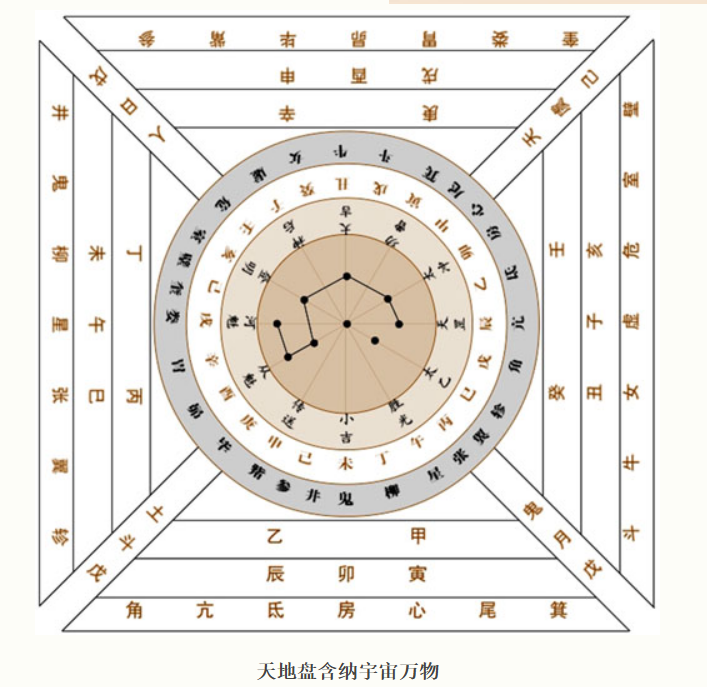
Da Liu Ren divination chart showing the cosmic arrangement of Heaven and Earth plates. This ancient system reveals connections between past lives and present circumstances through the precise positioning of celestial elements and their earthly correspondences. Image source: Guoyi360
7.2 Methodology for Past Life Reading
When using Da Liu Ren specifically for past life divination, practitioners employ specialized techniques:
- Ancestral Transmission Analysis: Examining particular configurations in the Three Transmissions that indicate ancestral influences and past incarnations.
- Hidden Stem Identification: Locating and interpreting “hidden stems” (藏干) that provide clues about previous lifetimes and their influence on the current incarnation.
- Element Dominance Assessment: Analyzing which of the Five Elements predominates across the divination array to identify the primary themes of past incarnations.
- Karmic Debt Recognition: Identifying specific patterns that indicate unresolved karmic debts or incomplete lessons from previous lives.
- Soul Purpose Revelation: Discerning configurations that reveal the overarching purpose of the soul’s journey across multiple lifetimes.
7.3 Interpreting Past Life Information
The interpretation of past life information through Da Liu Ren requires both technical knowledge and intuitive understanding. Key aspects of interpretation include:
- Timeline Identification: Determining the approximate historical period of significant past incarnations.
- Geographic Associations: Identifying locations where previous lives were lived, often indicated by specific Earthly Branch associations.
- Relationship Patterns: Recognizing recurring relationship dynamics that span multiple lifetimes.
- Life Lesson Themes: Discerning the primary spiritual lessons being worked through across incarnations.
- Talent and Ability Recognition: Identifying skills and abilities developed in past lives that remain accessible in the current incarnation.
“The inner mathematics system is profound, intricate, and complicated, and once mastered, it provides one with penetrating insight into the world events of the past, present, and future.”
Source: Yu, G., & Ji, J. (2021). Principles of Liu Ren Divination. Independent publication.
7.4 Integration with Present Circumstances
Perhaps the most valuable aspect of past life divination through Da Liu Ren is its pragmatic integration with present circumstances. Rather than treating past lives as merely interesting historical information, Da Liu Ren divination reveals how past patterns actively influence current challenges and opportunities.
This integration allows individuals to:
- Recognize recurring patterns that may be limiting their current growth
- Identify unresolved relationships that have continued into the present lifetime
- Access talents and abilities developed in previous incarnations
- Understand the deeper purpose behind seemingly random life events
- Make more conscious choices that align with their soul’s evolution
By providing this comprehensive perspective that spans multiple lifetimes, Da Liu Ren offers a uniquely profound tool for spiritual insight and personal transformation.
For those interested in exploring the spiritual dimensions of traditional Chinese metaphysics, free Five Elements testing provides an introduction to the energetic patterns that inform Da Liu Ren divination.
8. Historical Case Studies
Throughout Chinese history, numerous instances of Da Liu Ren divination have been recorded, demonstrating its precision and effectiveness in various contexts. These historical case studies not only validate the system’s efficacy but also provide valuable examples for contemporary practitioners to study.
8.1 Zhuge Liang’s Military Applications
Perhaps the most famous historical practitioner of Da Liu Ren was the legendary strategist Zhuge Liang (181-234 CE), who served as chancellor of the state of Shu Han during the Three Kingdoms period. While Zhuge Liang is often associated with his use of Qi Men Dun Jia, historical records suggest he was also highly proficient in Da Liu Ren divination.
“Different Chinese divination systems tend to serve different types of situations… This was cited in the romance of the 3 kingdoms novel when Zhuge Liang supposedly makes prognostications in his sleeves while riding on a horse to foresee the incoming of good news.”
Source: Chong, A. (2021). The Basics Of Da Liu Ren Divination. FengShuied.
In one notable instance, Zhuge Liang reportedly used Da Liu Ren to predict the optimal timing for a military campaign against Wei forces. By analyzing the Three Transmissions and their Five Elements relationships, he identified a period when the enemy’s Metal energy would be weakened by his army’s Water energy. The resulting military operation was successful, as the divination had indicated.
8.2 Shen Kuo’s Weather Prediction
The renowned Song Dynasty polymath Shen Kuo (1031-1095 CE) documented his use of Da Liu Ren for meteorological predictions in his classic work “Dream Pool Essays” (夢溪筆談). In one account, Shen described how he used Da Liu Ren to predict an unusual weather pattern that would affect an upcoming imperial ceremony.
By analyzing the particular configuration of Heaven and Earth Plates for the day in question, Shen identified a disharmonious pattern indicating unexpected rainfall followed by sudden clearing. He advised the imperial court to prepare accordingly, and when the weather unfolded exactly as predicted, his reputation as a diviner was significantly enhanced.
8.3 Li Suzhen’s Military Strategy
During the Taiping Rebellion (1850-1864), a female diviner named Li Suzhen gained fame for her skilled application of Da Liu Ren in military contexts. Historical records indicate that Li Suzhen joined her brother, Li Mengjun, to fight against the Taiping forces in southern China.
According to Yuan Shushan’s “Biographies of Diviners in Chinese History by Period” (中國歷代卜人傳), Li Suzhen was accomplished in horseriding, archery, military tactics, and astrology. Her strategic advice, informed by Da Liu Ren divination, proved valuable in several engagements against the rebels before her heroic death in an attack on Hanyang, Hubei, in 1855.
| Name | Period | Main Contributions | Representative Works/Deeds | Historical Impact |
|---|---|---|---|---|
| Zhuge Liang | 181-234 CE (Three Kingdoms) | Integration of military strategy with Da Liu Ren | Legend of “making calculations on horseback” | Gained wide recognition for Da Liu Ren in military applications |
| Shen Kuo | 1031-1095 CE (Northern Song) | Weather prediction and academic research | Da Liu Ren records in “Dream Pool Essays” | Enhanced the academic status of Da Liu Ren |
| Li Suzhen | 1820-1855 CE (Qing Dynasty) | Military divination applications | Military predictions during the Taiping Rebellion | Demonstrated female talent in the field of divination |
| Wang Tingxiang | Ming Dynasty | Imperial examination predictions | Accurately predicted top three provincial exam candidates | Proved Da Liu Ren’s applications in educational contexts |
| Yuan Shushan | 1882-1952 CE (Republican Era) | Historical research and document compilation | “Biographies of Diviners in Chinese History” | Preserved Da Liu Ren traditions and history |
8.4 Imperial Examination Success Prediction
Another historically documented application of Da Liu Ren was predicting success in the imperial examinations that determined government appointments in imperial China. One case from the Ming Dynasty records how a diviner named Wang Tingxiang used Da Liu Ren to accurately foretell which candidates would achieve the highest ranks in a provincial examination.
Wang’s method involved analyzing the Three Transmissions in relation to the specific day of the examination and the birth data of individual candidates. His predictions proved remarkably accurate, correctly identifying all three of the top-ranked scholars before the examinations took place.
8.5 Contemporary Case: Business Negotiation
A more recent application of Da Liu Ren was documented in an online divination community, where a practitioner described using the system to predict the outcome of a business negotiation:
“For example, today there was a negotiation with an elementary school principal… before the school final decision came out, I made a divination using Da Liu Ren… san chuan is Zi (子), Shen (申) and Chen (辰), namely 申子辰, it’s a water group in Da Liu Ren. The term Group is a signal of cooperation and getting together.”
Source: I Ching Community Forum. (2013). Da Liu Ren–one of the china three highest level divination skills from I Ching. I Ching Community
The diviner reported that the actual outcome aligned with the prediction, with the parties successfully reaching a cooperative agreement—demonstrating the continuing relevance and accuracy of Da Liu Ren in contemporary contexts.
These historical case studies showcase the versatility and precision of Da Liu Ren divination across various domains, from military strategy to personal career matters, and highlight its enduring value as a divination system.
For those interested in applying traditional wisdom to contemporary challenges, consultation with experienced practitioners can provide personalized guidance based on these time-tested principles.
9. Comparison with Other Divination Systems
Da Liu Ren exists within a rich ecosystem of Chinese divination traditions, each with its own strengths and specialized applications. Understanding how Da Liu Ren compares to other major systems helps to appreciate its unique contributions and appropriate contexts for its use.
9.1 Da Liu Ren and I Ching (Yi Jing)
The I Ching (易經), or Book of Changes, is perhaps the most widely known Chinese divination system internationally. While both systems share philosophical roots in Yin-Yang theory and Five Elements, they differ significantly in several aspects:
| Aspect | Da Liu Ren | I Ching |
|---|---|---|
| Structure | Heaven and Earth plates with Three Transmissions and Four Classes | 64 hexagrams composed of six lines each |
| Casting Method | Calculation based on date/time plus selection of starting point | Random generation through coin tosses or yarrow stalks |
| Temporal Focus | Integrates specific temporal factors explicitly | Less explicitly temporal, more situational |
| Complexity | Highly complex system with numerous rules | Relatively simpler structure with deep symbolic meaning |
| Primary Strength | Precise timing and detailed situational analysis | Philosophical wisdom and general guidance |
As one practitioner noted in an online divination forum:
“Different Chinese divination systems tend to serve different types of situations… This was cited in the romance of the 3 kingdoms novel when Zhuge Liang supposedly makes prognostications in his sleeves while riding on a horse to foresee the incoming of good news.”
Source: Chong, A. (2021). The Basics Of Da Liu Ren Divination. FengShuied.
9.2 Da Liu Ren and Qi Men Dun Jia
Qi Men Dun Jia (奇門遁甲) is another of the “Three Styles” of high-level Chinese divination. The two systems share historical connections but differ in important ways:
| Aspect | Da Liu Ren | Qi Men Dun Jia |
|---|---|---|
| Board Structure | Heaven and Earth plates with positions for 12 Earthly Branches | 3×3 magic square with nine palaces |
| Historical Usage | More popular during Yuan Dynasty and later periods | Widely used during Tang and Song dynasties |
| Central Focus | Emphasis on the six Ren (壬) stems in the sexagenary cycle | Emphasis on the concealment of Jia (甲) stem |
| Complexity | Contains approximately four times as many rules as Qi Men Dun Jia | Complex but relatively more streamlined |
| Primary Application | Wide range of applications including weather, health, relationships | Traditionally strong emphasis on strategic and tactical planning |
Historical evidence suggests that while Qi Men Dun Jia was predominant during earlier periods, Da Liu Ren eventually surpassed it in popularity:
“Qi Men Dun Jia was widely used in China during the Tang and Song dynasties. By the time of the Yuan dynasty, Da Liu Ren had overtaken Qi Men Dun Jia in popularity, at least according to source documents found in the caverns of Dunhuang.”
Source: Wikipedia contributors. (2024). Da Liu Ren. In Wikipedia. https://en.wikipedia.org/wiki/Da_Liu_Ren
9.3 Da Liu Ren and Tai Yi Shen Shu
Tai Yi Shen Shu (太乙神數), the third of the “Three Styles,” is perhaps the least known internationally but held significant importance in imperial China:
| Aspect | Da Liu Ren | Tai Yi Shen Shu |
|---|---|---|
| Board Structure | Heaven and Earth plates with rectangular layout | Larger board that may be square or circular |
| Primary Usage | Versatile applications from personal to military | Primarily used for major imperial activities |
| Cosmic Focus | Emphasis on the six Ren (壬) stems representing Yang Water | Emphasis on the Great Yi God (太乙) and its movement |
| Scope | Both micro (personal) and macro (societal) events | Greater emphasis on macroscopic events |
9.4 Da Liu Ren and BaZi (Four Pillars)
BaZi (八字), or Four Pillars of Destiny, is a popular Chinese astrological system used for analyzing a person’s life path based on their birth time:
| Aspect | Da Liu Ren | BaZi |
|---|---|---|
| Primary Focus | Situation-specific divination for various questions | Life destiny analysis based on birth time |
| Structure | Complex board with multiple components | Four pillars representing year, month, day, and hour of birth |
| Flexibility | Can be cast for any moment and question | Fixed chart based on birth time |
| Primary Strength | Situational analysis and specific questions | Character analysis and life path prediction |
9.5 Comparative Data on Accuracy and Applications
While subjective assessments of divination accuracy are difficult to quantify scientifically, traditional rankings and historical records provide some comparative insights:
| Divination System | Traditional Ranking | Key Strength | Ideal Application |
|---|---|---|---|
| Da Liu Ren | Highest of the Three Styles | Precision and comprehensiveness | Complex situations requiring detailed analysis |
| Qi Men Dun Jia | High (one of the Three Styles) | Strategic planning | Competitive situations and timing decisions |
| Tai Yi Shen Shu | High (one of the Three Styles) | Macroscopic prediction | Major decisions affecting large groups |
| I Ching | Foundational classical system | Philosophical wisdom | Ethical dilemmas and life direction questions |
| BaZi | Popular astrological system | Character and destiny analysis | Understanding personal strengths and challenges |
This comparative analysis highlights the complementary nature of these divination systems, with Da Liu Ren distinguished by its exceptional precision and comprehensiveness, making it particularly valuable for complex analytical questions requiring detailed temporal consideration.
For those interested in exploring other systems of traditional Chinese metaphysics, feng shui testing services provide a practical introduction to spatial energy analysis that complements temporal divination methods.
10. Modern Applications
While Da Liu Ren originated in ancient China, its principles and techniques remain relevant in contemporary contexts. Modern practitioners continue to apply this sophisticated system to address a wide range of contemporary challenges, adapting its traditional framework to present-day situations.
10.1 Personal Decision-Making
In an era characterized by overwhelming information and complex choices, Da Liu Ren provides a structured framework for personal decision-making. Contemporary applications include:
- Career Transitions: Determining optimal timing for job changes, promotions, or entrepreneurial ventures.
- Relationship Decisions: Assessing compatibility and auspicious timing for significant relationship steps.
- Educational Choices: Selecting the most beneficial educational paths and timing for examinations or applications.
- Health Management: Identifying favorable periods for medical procedures or lifestyle changes.
- Travel Planning: Determining auspicious dates and directions for important journeys.
10.2 Business Applications
Da Liu Ren has found particular relevance in business contexts, where timing and strategic positioning are critical to success:
| Business Domain | Da Liu Ren Application |
|---|---|
| Market Entry | Identifying optimal timing for product launches or market expansion |
| Negotiations | Determining favorable circumstances for major negotiations |
| Investment | Analyzing cycles and timing for investment decisions |
| Recruitment | Selecting auspicious dates for hiring key personnel |
| Strategic Planning | Forecasting market conditions and competitive dynamics |
Business leaders in Asia, particularly in Singapore, Taiwan, and Hong Kong, often consult with Da Liu Ren practitioners before making major business decisions, recognizing the system’s value in providing additional strategic insights. The integration of traditional wisdom with modern business practices represents a distinctive approach to decision-making that acknowledges both analytical and intuitive dimensions.
10.3 Digital Adaptations
The digital age has transformed how Da Liu Ren is practiced and accessed:
- Calculation Software: Specialized programs that automate the complex calculations required for Da Liu Ren casting, making the system more accessible to contemporary practitioners.
- Mobile Applications: Apps that allow users to cast Da Liu Ren divinations on their smartphones, often including interpretive guidance.
- Online Communities: Digital forums and social media groups where practitioners share insights, interpretations, and case studies.
- Virtual Consultations: Professional Da Liu Ren consultants offering their services globally through video conferencing platforms.
| Application Area | Usage Frequency (1-10) | Perceived Accuracy (1-10) | Main User Groups | Modern Innovation Methods |
|---|---|---|---|---|
| Business Decisions | 8 | 7.5 | East Asian entrepreneurs, business consultants | AI-assisted analysis, data visualization |
| Personal Career Planning | 9 | 8 | Professionals aged 25-45 | Mobile applications, simplified calculations |
| Health Consultation | 6 | 6.5 | TCM practitioners, alternative medicine enthusiasts | Integration with modern medical concepts |
| Relationships & Marriage | 7 | 7 | Couples in relationships, marriage counselors | Psychology integration, online matching analysis |
| Investment Decisions | 5 | 6 | Traditional investors, small investment firms | Combination with technical analysis, cycle identification |
| Academic Research | 3 | Not Applicable | Historians, cultural researchers | Cross-disciplinary studies, digital archives |
10.4 Integration with Modern Psychology
Some contemporary practitioners and scholars have explored the integration of Da Liu Ren with modern psychological approaches:
- Symbolic Analysis: Using Da Liu Ren symbols as access points for subconscious material, similar to Jungian archetypal work.
- Decision Framework: Employing the structured analytical process as a method for comprehensive situation assessment.
- Pattern Recognition: Utilizing Da Liu Ren’s emphasis on cyclical patterns to identify recurring psychological and behavioral themes.
- Timing Awareness: Incorporating the system’s sensitivity to timing into therapeutic approaches focused on life transitions.
This integration represents a contemporary approach that honors the traditional wisdom of Da Liu Ren while acknowledging modern understandings of human psychology.
10.5 Environmental and Collective Applications
Beyond individual and business applications, some practitioners apply Da Liu Ren to broader environmental and social questions:
- Weather Patterns: Continuing the traditional application of predicting weather events and seasonal trends.
- Environmental Planning: Identifying favorable timing for environmental initiatives and conservation efforts.
- Social Trends: Analyzing broader societal cycles and their potential impacts on communities.
- Public Health: Forecasting disease patterns and optimal timing for health interventions.
10.6 Challenges and Adaptations
Despite its enduring value, Da Liu Ren faces several challenges in the modern context:
| Challenge | Modern Adaptation |
|---|---|
| Complexity of Traditional System | Digital tools that automate calculations while preserving interpretive depth |
| Declining Number of Master Practitioners | Online education platforms and apprenticeship programs to train new generations |
| Integration with Contemporary Worldviews | Interpretation frameworks that bridge traditional concepts with modern understanding |
| Cross-Cultural Accessibility | Multilingual resources that explain core concepts in culturally relevant terms |
These adaptations help ensure that Da Liu Ren remains a living tradition rather than merely a historical curiosity, continuing to provide valuable insights in our rapidly changing world.
For those interested in exploring how traditional practices can be applied to contemporary life challenges, Five Elements testing offers an accessible introduction to the energetic principles that underlie Da Liu Ren divination.
11. Conclusion
Da Liu Ren stands as one of the most profound and comprehensive divination systems in the Chinese metaphysical tradition. This exploration has revealed its historical significance, cosmological foundations, methodological sophistication, and enduring relevance to contemporary life.
As we have seen, Da Liu Ren integrates multiple dimensions of analysis—temporal, elemental, directional, and numerical—into a coherent framework that provides remarkably precise insights into complex situations. Its ability to address questions ranging from mundane daily decisions to profound spiritual inquiries demonstrates its exceptional versatility.
Several key insights emerge from our examination of this remarkable divination system:
- Comprehensive Integration: Da Liu Ren seamlessly integrates various aspects of Chinese metaphysical thought, including Yin-Yang theory, Five Elements, astronomy, and numerology, creating a holistic analytical framework.
- Temporal Sensitivity: The system’s sophisticated approach to time—both cyclical and linear—allows for nuanced understanding of how timing influences outcomes.
- Spiritual Depth: Beyond practical divination, Da Liu Ren offers access to profound spiritual insights, including past life patterns and soul evolution.
- Adaptable Methodology: From complex imperial court applications to simplified palm methods, Da Liu Ren demonstrates remarkable adaptability across contexts while maintaining its core principles.
- Enduring Relevance: Despite its ancient origins, Da Liu Ren continues to provide valuable guidance for contemporary challenges in personal, professional, and social domains.
The historical documentation of Da Liu Ren’s accuracy in military strategy, weather prediction, personal guidance, and other applications suggests that this system accesses genuine patterns of cosmic influence that transcend cultural and historical boundaries. While modern scientific paradigms may not readily accommodate its underlying assumptions, the practical efficacy of Da Liu Ren invites us to consider broader conceptions of causality and interconnection than those typically recognized in contemporary Western thought.
| Analysis Stage | Main Tasks | Key Analysis Points | Methods and Techniques |
|---|---|---|---|
| Stage 1: Basic Judgment | Confirm Three Transmissions and Pattern |
· Combinations of Initial, Intermediate, and Final Transmissions · Pattern type identification · Five Elements production and control relationships |
· Heaven-Earth Plate comparison · Verification of day-month-hour relationships · Checking vacancy positions |
| Stage 2: In-depth Analysis | Interpret Four Classes relationships and seasonal influences |
· Day, Month, Hour, and Integrated Classes · Seasonal influence · Divine Spirits’ auspicious and inauspicious influences |
· Analysis of Divine Generals’ movement and stillness · Assessment of Earthly Branch strength and weakness · Five Elements mutual generation and restraint principles |
| Stage 3: Contextual Application | Interpret specifically in relation to the query |
· Earthly Branches corresponding to the query topic · Person-Branch relationships · Time and direction deductions |
· Integration with historical cases · Reference to classical interpretations · Flexible application of experiential wisdom |
| Stage 4: Comprehensive Judgment | Form final conclusions and recommendations |
· Overall fortune assessment · Development trend prediction · Solution recommendations |
· Application of transmission transformation principles · Multiple element comprehensive balancing · Integration of traditional wisdom with modern context |
For those drawn to explore Da Liu Ren further, several pathways are available:
- Theoretical Study: Engaging with classical texts and modern scholarly works on Da Liu Ren’s principles and methods.
- Practical Learning: Working with experienced practitioners to develop hands-on skills in casting and interpretation.
- Personal Application: Applying Da Liu Ren principles to one’s own life situations to develop experiential understanding.
- Contemporary Integration: Exploring how Da Liu Ren insights can complement modern approaches to decision-making and personal development.
As interest in traditional wisdom traditions continues to grow globally, Da Liu Ren offers a particularly rich resource for those seeking sophisticated tools for navigating life’s complexities. Its combination of mathematical precision and intuitive symbolism provides both structure and flexibility, making it adaptable to diverse cultural contexts while maintaining its essential principles.
In conclusion, Da Liu Ren represents a remarkable achievement of Chinese metaphysical thought—a system that bridges the practical and the spiritual, the mathematical and the intuitive, the ancient and the contemporary. As we continue to face unprecedented challenges in our rapidly changing world, the time-tested wisdom of Da Liu Ren offers valuable perspectives for approaching life with greater awareness, timing, and harmony.
For those interested in experiencing personalized insights based on traditional Chinese metaphysical principles, professional consultation services are available through dedicated practitioners who maintain these valuable traditions in the contemporary world.
13. References
- Chong, A. (2021). The Basics Of Da Liu Ren Divination. FengShuied.
- I Ching Community Forum. (2013). Da Liu Ren–one of the china three highest level divination skills from I Ching.
- Smith, R. J. (1991). Fortune-tellers and Philosophers: Divination in Traditional Chinese Society. Westview Press.
- Wikipedia contributors. (2024). Da Liu Ren. In Wikipedia.
- Wikipedia contributors. (2024). Chinese fortune telling. In Wikipedia.
- Wikipedia contributors. (2024). Luopan. In Wikipedia.
- Wu, L. (2009). Women and divination in traditional China: Some reflections.
- Yu, G., & Ji, J. (2021). Principles of Liu Ren Divination. Independent publication.
- Yuan, S. (1948). Zhongguo lidai buren zhuan (Biographies of Diviners in Chinese History by Period). Shanghai.
- Zhang, W. (2016). The Four Pillars of Destiny: A Guide to Relationships. Balboa Press.